
Construction Briefs | 012 - Stop Waiting for Gray Hair to Give You Permission
On My Mind
When I was a young PM I can’t tell you how many meetings I was in where a tough question came up, or a real decision needed to be made, and someone said or insinuated some version of: “We probably need a few more gray hairs in the room for this.”
And I get it. Construction is a high-risk business, experience is important, scar tissue matters blah blah blah. But here’s the thing that I’ve come to realize over time: the people who are given authority to speak aren’t always the people who should be. In an industry that at times obsesses over lean theory, we too often forgot the power of trusting those closest to a problem. Which means the person with the clearest perspective isn’t always the oldest one at the table. We’ve all seen confident, experienced people make bad calls.

A lot of younger PMs and superintendents have been in that position. You see something, you know the plan isn’t quite right, or the sequence is off, or the risk isn’t being acknowledged. But you hesitate and question yourself and the moment passes.
What I’ve learned, sometimes the hard way, is that instinct paired with proximity to the work and open mind is a powerful thing. And when the moment calls for leadership, waiting for permission is often the riskiest move of all.
Brief History Lesson
There’s a modern cultural story we’ve absorbed, especially for men, that your teens are for working out your recklessness, twenties is when you start “figuring it out,” thirties are where things stabilize, and real leadership comes later. It’s a neat, comfortable timeline but it’s also in conflict with most of history.
For the majority of human history, that timeline would’ve sounded absurd. Leadership came when circumstances demanded it, not when a birthday arrived.
George Washington was surveying the Virginia frontier in his early twenties, learning terrain and logistics in conditions that required courage and independent judgment. Alexander the Great was commanding armies at twenty. The industrial titans like Carnegie and Rockefeller were creating industries before thirty.
The specifics don’t matter as much as the pattern: throughout history, people led when the situation called for it, not when they hit some arbitrary age threshold.
Here’s why this matters for construction: we’ve created a cultural permission structure that delays leadership precisely when projects need it most. The person closest to the problem, the one who sees the sequence risk or the schedule conflict or the safety issue, is at times the younger PE, newly promoted PM or assistant superintendent. But they’re waiting for permission to speak up. Waiting for gray hair.
The point isn’t to romanticize youth or dismiss experience. It’s to remember that there is no universal timeline for achievement or leadership. That timeline is a cultural construct, not a law of nature.
Every person’s life has moments where they’re invited, sometimes quietly, sometimes uncomfortably, to step into who they’re becoming. You either respond to that call or you don’t. And while there’s rarely just one opportunity, there are moments that shape the trajectory of your career if you have the courage to act.
What This Looks Like on a Jobsite
When I was a young PM, mid-20s, I often felt there were decisions I shouldn’t make yet. Not because I didn’t care or wasn’t capable, but because I hadn’t accumulated enough years or enough war stories. What I eventually figured out is that instincts don’t come from nowhere. They're built on inputs you've gathered, internal and external, that you learn to trust over time.
For me, one of the most practical leadership habits I’ve developed is a healthy distrust of what I know. When something feels off, instead of deferring, I dig and get into the details. I try and ask better questions. I document what’s actually happening and see how those details are forming a trend or revealing an insight.
That work creates a foundation. And once your instincts are operating on real information (drawings, constraints, labor realities, site conditions), you earn the right to trust them. A mentor told me once, very plainly, “You need to trust your instincts.” That didn’t mean guessing. And it definitely didn’t mean being reckless. It meant doing the work to inform your judgment, then having the confidence to act on it. So while “trust your gut” is directionally true, what I have found is that there is real confidence in doing the work that earns you the right to trust your gut.
Leadership on a project doesn’t look like having all the answers. It looks like being willing to step forward with clarity, humility, and the courage to say, “Here’s what I’m seeing, and here’s what I think we should do.”
Build Your Own Board of Directors
One of the quiet traps younger leaders fall into is thinking confidence has to be self-generated. It doesn’t and often won’t be. What helped me, and what I’d encourage anyone coming up in this industry to do, is build a personal board of directors. It doesn’t have to be a formal thing, just a small group of people you trust and can call upon when their area of expertise or insight would be helpful.
In my own life, those people are almost always more experienced than me. And while experience matters, it isn’t the only criteria I use to evaluate. I look for character above anything. How do they treat people? How have they built their reputation? How do they think? How do they communicate under pressure?
When you find people with both experience and character, lean in. Ask questions and pressure-test your thinking with them. Let them sharpen your instincts instead of replacing them.
You don’t need to wait until you’re a senior PM or an executive to do this. In fact, the earlier you start, the stronger your leadership foundation becomes.
Your Moment Is Now
Construction doesn’t need fewer young leaders willing to think and act. It needs more. Projects don’t fail because someone was too young, they often fail because a lack of leadership in key moments.
If you’re a PM or superintendent reading this and you feel that pull, that sense that you see something others don’t, pay attention to it. Do the work to inform it. Surround yourself with people who sharpen it.
But don’t wait for gray hair to give you permission.
Sometimes the project, and the person you’re becoming, needs you to lead now.
AI Thought of the Week
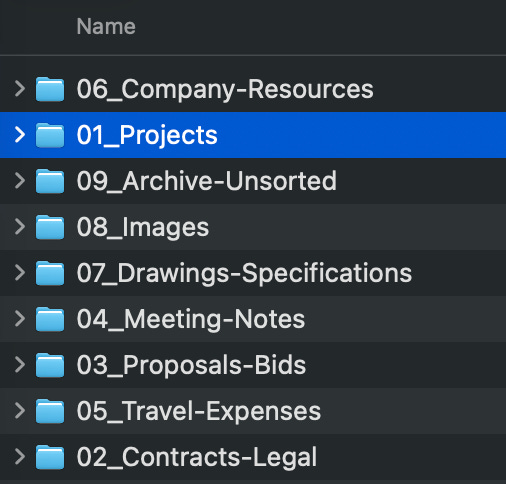
ChatGPT might have been the gateway drug into the AIverse. I have begun using Claude which in many ways seems to have better reasoning and more human sounding outputs. But what is really starting to blow my mind though is Claude Cowork. The use cases are near endless and I’m only starting to scratch the surface. For reference I had Claude Cowork organize a very messy large file of random pdf’s, excel and word docs into something I can actually use (screenshot below).
I also created a workflow within Cowork that is enabling me to cut down on the time it takes me to do Guest Prep for podcasts by feeding it only a few pieces of context on an upcoming guests. There’s a special feeling when you hit Enter and realize the computer is working for you even when you walk away from it. There is also something called Clawdbot/Moltbot which I am beginning to do some research on which sounds fascinating, dangerous and fun.
See you all in a couple of weeks.